Gold
Gold Processing Optimization: Turning Challenges into Measurable Recovery
SNF helps gold producers improve recovery, stabilize leaching circuits, control scaling, and process clay-rich ores more efficiently — reducing total operating costs without adding process complexity.

The Operational Reality of Modern Gold Processing
Gold producers operate in an increasingly demanding environment where the push for higher recovery must be balanced against rising operational complexity.
Declining ore grades and the prevalence of clay-rich, “difficult” deposits create significant rheological bottlenecks that impact both mixing and recovery. At the same time, high-salinity process water leads to severe scaling issues in critical elution and heap leach infrastructure, driving up maintenance costs and causing process interruptions.
In this environment, optimizing the bottom line requires more than just chasing the recovery curve.
Success today depends on an integrated approach that eliminates physical and chemical constraints to protect your margins while simultaneously reducing energy consumption and water waste.
SNF partners with gold operations worldwide to turn these challenges into measurable gains—providing specialized chemical solutions for cyanide leaching circuits, elution systems, and heap leach pads.
Leaching Performance Optimization
Improving Recovery in CIL and CIP Circuits
In Carbon-in-Leach (CIL) and Carbon-in-Pulp (CIP) systems, clay-rich or ultra-fine ores increase slurry viscosity and create physical barriers that block cyanide and oxygen access. This inhibits dissolution kinetics and prevents complete gold recovery.
What happens inside the tank?
Higher slurry yield stress leads to poor mixing and stagnant "dead zones".
Reduced air dispersion limits oxygen availability critical for the leaching reaction.
Slower dissolution rates increase the risk of preg-robbing by carbonaceous gangue.
The SNF Approach
SNF rheology modification (FLOMIN™ RMA) technologies fundamentally lower yield stress and optimize hydrodynamics within leach tanks. This improves slurry behavior and enhances mass transfer, enabling higher solids concentration without compromising process stability.
Operational Impact
Faster Gold Dissolution
Preg-Robbing Mitigation
Energy Efficiency
Increased Throughput
ADVANCED SCALE CONTROL IN GOLD RECOVERY
Securing Uptime and Process Efficiency
Scaling is the precipitation of minerals, such as calcium carbonate and gypsum, that deposit inside critical process equipment. This buildup creates significant flow restrictions and thermal resistance, leading to reduced gold stripping rates and increased energy consumption. Scaling remains one of the primary causes of unplanned maintenance and production losses in gold operations.
Where Scaling Impacts Gold Production
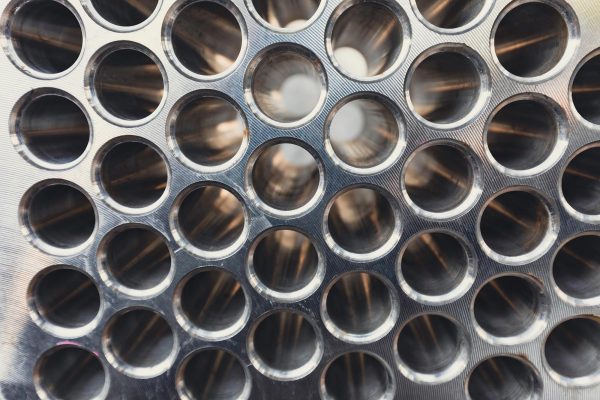
- Elution Circuits & Heat Exchangers: High temperatures in stripping circuits accelerate the precipitation of carbonates, “choking” heat exchangers and reducing the thermal efficiency required for gold desorption.
- Heap Leach Irrigation Systems: Scale buildup in drip emitters and sprinkler heads causes non-uniform reagent distribution, leading to “dry spots” on the heap and significant losses in gold recovery.
- Carbon Adsorption Circuits: Mineral fouling on activated carbon reduces available surface area for gold loading, decreasing adsorption kinetics and increasing carbon regeneration costs.
The SNF Solution
- Prevent Mineral Precipitation: Keeps scale-forming minerals in solution even under high-temperature and high-pH conditions.
- Protect Carbon Performance: Maintains clean activated carbon surfaces to ensure maximum adsorption kinetics and gold capture.
- Optimize Reagent Distribution: Ensures heap leach emitters remain clear for uniform irrigation and maximum leaching efficiency.
- Eliminate Unplanned Downtime: Directly reduces the frequency of acid washes and mechanical cleaning, maximizing plant uptime.

Managing Clay-Rich and Complex Ores
In gold flotation circuits, clay-rich pulps hinder performance by thickening the slurry and creating “slime coatings” that physically mask mineral surfaces. This prevents reagents from attaching correctly, leading to sluggish kinetics and significant gold losses in the final tails.
By removing the physical interference of clays, we restore chemical efficiency and ensure that collectors can attach firmly to target gold-bearing minerals. SNF’s gold flotation technology provides:
- Higher Gold Recovery: Restores surface chemistry for maximum collector attachment.
- Faster Flotation Kinetics: Improves bubble-particle interaction for higher throughput.
- Improved Concentrate Grade: Enhances selectivity by preventing clay slimes from entering the concentrate.
Why Gold Producers Partner with SNF
Gold operations require measurable performance improvements — not incremental adjustments.
Our Approach Combines:
- Global manufacturing strength
- On-site audits and laboratory studies
- Industrial trials under real operating conditions
- Local technical support and field presence
We work alongside our customers to secure long-term metallurgical and operational performance.

Proven Process Solutions for Gold Operations
Gold plants must maximize recovery while managing ore variability and environmental constraints. SNF delivers proven chemistries and on-site expertise to optimize flotation, clarification, tailings management, and water reuse — ensuring stable performance across the entire operation.