Sustainable Performance Solutions for Iron Ore Processing
Iron ore is the foundation of global steelmaking — and its processing chain is evolving rapidly.
Producers face increasing pressure to improve Fe grade, enhance pellet quality, reduce energy consumption, and cut CO₂ emissions, while managing finer and more variable ores.
SNF supports iron ore producers with chemistry-driven process solutions that improve productivity, product quality, and environmental performance from beneficiation to agglomeration.
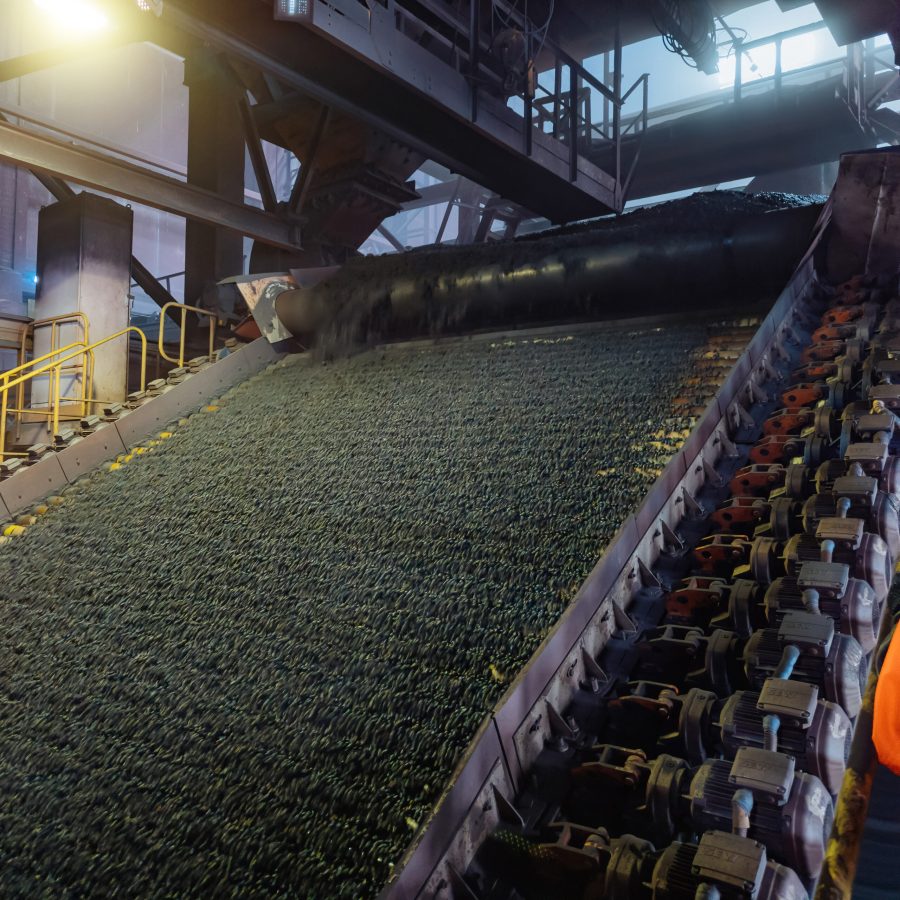
Pellet quality defines furnace stability and direct reduction efficiency.
Traditional mineral binders introduce impurities that dilute Fe grade and increase slag volume. By replacing these binders with advanced organic alternatives, pellet plants can improve purity while maintaining mechanical strength
SNF technologies support:
High cold crushing strength and crack-free pellets
Stable green ball formation
Reduced silica and alumina contamination
Lower induration energy demand
This enables improved blast furnace productivity and supports hydrogen-ready DR applications.
Optimizing Sinter Productivity
Ultra-fine ores challenge granulation and reduce sinter bed permeability, often forcing higher lime and fuel consumption.
SNF enhances cohesion within the sinter mix, stabilizes granule formation, and improves gas flow through the bed. The result is higher productivity with lower additive consumption and reduced CO₂ emissions
These improvements support modern low-carbon sintering practices without compromising throughput.
Unlocking Value from Iron Ore Fines
Declining ore grades mean more fines generation. These fine particles increase slurry viscosity, disrupt classification, and reduce separation efficiency.
Through advanced fines issues management and selective aggregation strategies, SNF improves grinding performance, magnetic separation selectivity, and flotation recovery of ultra-fine particles.
Operations benefit from improved concentrate grade and higher overall iron recovery, even under complex mineralogical conditions.
Sustainability
Enabling Circular Steel Through Cold Briquetting
Steel plants generate significant volumes of iron-rich residues such as mill scale, sludges, and dust.
Instead of disposal, these materials can be converted into dense, recyclable briquettes using cold-bonded agglomeration techniques. This approach eliminates high-temperature induration and significantly lowers CO₂ emissions.
By enabling residue recycling, SNF contributes to more circular and resource-efficient steel production.
Driving Environmental and Economic Impact
SNF’s iron ore applications are designed to improve both plant performance and sustainability metrics.
They contribute to:
Higher Fe content and improved steel yield
Reduced slag generation
Lower fuel and lime consumption
Reduced grinding energy demand
Lower transport emissions through reduced binder dosage
CO₂ reduction pathways via cold-bonded technologies
Improved water management through rheology optimization
By combining polymer innovation with on-site expertise, SNF supports iron ore producers in building more efficient and lower-carbon mineral value chains.
A Strategic Partner for the Iron & Steel Industry
The shift toward hydrogen-based direct reduction and low-carbon steelmaking demands innovation in agglomeration and fines management.
SNF works alongside pellet plants, sinter operations, and integrated steel producers to strengthen product quality, improve energy efficiency, and accelerate decarbonization strategies.
Get in Touch
Ready to improve pellet quality, increase fines recovery, and reduce CO₂ in your iron ore process?
Contact SNF to design your iron ore performance program.
SNF offers a complete range of chemistries for iron ore processing, supporting flotation, pelletizing, tailings management, dust control, and water management.
Integrated solutions across the entire mining value chain — from handling and mineral processing to hydrometallurgy, pyrometallurgy, and tailings management.
Supporting mining operations with engineering, technical expertise, and integrated solutions designed to improve performance, reliability, and sustainability.